Rodents in Walls: Signs You’re Hearing Mice vs Squirrels vs Something Else
Few sounds are more unsettling than the one when you’re sitting in your quiet living room in Buffalo, and you hear it— that distinctive scratching, scurrying, or chewing from deep inside your walls. Your mind immediately races. Is it a mouse? A squirrel? Or something worse?
And here in Western New York, our seasonal changes have a lot to do with how pests act. As they had gone to bed inside the school on a warm Friday night, it grew cold. Cold enough for rodents to seek warmth, especially when the temperature drops and that “lake effect” snow machine starts cranking. In the fall, on the other hand, squirrels are busy hoarding food and seeking places to hibernate. Meanwhile, your home unfortunately resembles the ideal sanctuary.
Though it’s a troubling sound you’d rather not hear, at least having an explanation for the noise is your starting point in restoring peace. This guide will help you decipher those bumps in the night (or day) and determine if you’re hearing mice, squirrels, or a whole different type of intruder.
For prompt assistance without the detective work, you can contact Freedom Force Pest Control for a rodent inspection at 716-799-5282.
Here’s why Buffalo homes have attics and walls that are infested with rodents
Buffalo houses, whether they are stately antiques in Elmwood Village or new builds in the suburbs, are especially vulnerable to rodent problems. Our brutal winters drive animals to look for heated shelter, and the freeze-thaw cycle of our weather can cause small cracks in foundations and siding to widen into inviting little passages.
Rodents are opportunistic. If you have gaps around utility lines, worn weatherstripping, or unsealed soffits, they will find them. In addition, food from nearby bird feeders, compost piles, and pet feeding dishes that have been left outside can serve as a beacon to pests looking for a way to your home. When they are close enough to smell the warmth escaping from your home, they will attempt to enter.
Step 1: Locate the noise source
First Address The Problem, Then You Can Fix It. The acoustics of a house (and here we get into tricks) are tricky, but it’s a big clue where the house sound is coming from.
Wall vs. ceiling vs. attic vs. basement hints
Walls: If the sound appears to move up and down (rather than just horizontally through a wall), then the animal is probably using the stud bays or the area around plumbing pipes as its own highway.
Ceiling: If you hear scratches or loud thumps directly above you, the disturbances are likely in the attic or between floor joists.
Basement: Sounds near the rim joists (where the house frame meets the foundation) or around dryer vents are typically indicative of mice entering at ground level.
The time at which you hear the sound matters
Rodents operate on different schedules.
Night (9 pm–4 am): This is when most nocturnal animals come alive. If you hear scratching in the walls, at night when the house is quietest, and there are no other competing sounds, then mice or rats are a likely issue.
Morning and day: Squirrels and chipmunks tend to be diurnal. Hovering above your ceiling at 7:00 A.M.? “Races”? It’s likely squirrels.
Random bursts: Random sounds that do not follow a pattern could be birds holding up in your ductwork, or even non-animal problems such as expanding contrast, or loose screws and nails.
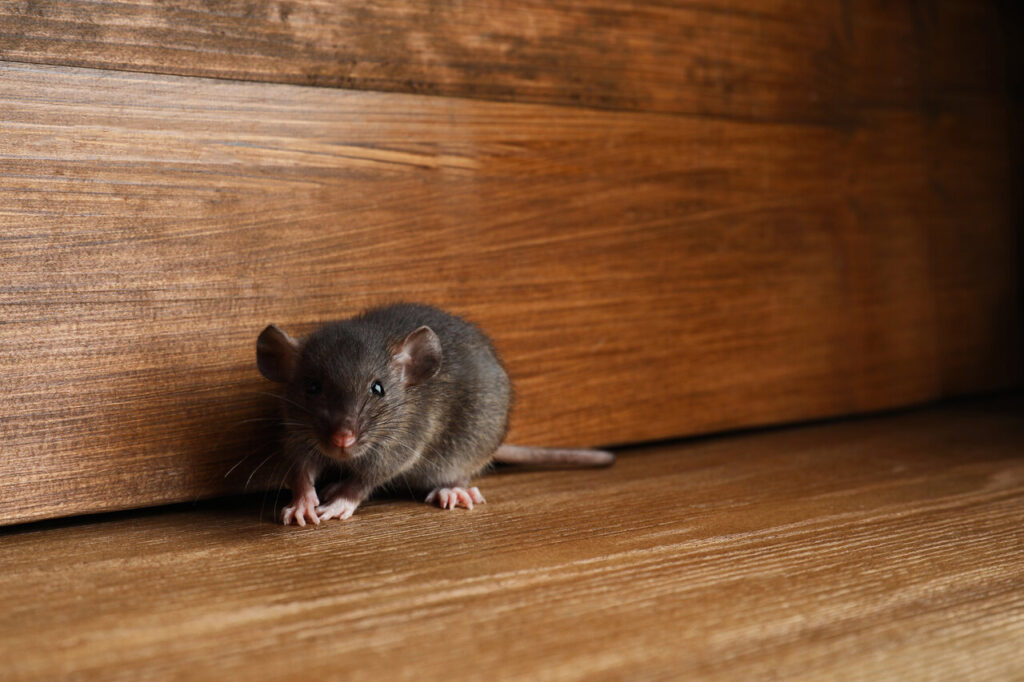
Mice in walls — common signs
Mice are the number 1 animal intruder in homes throughout Buffalo. They are tiny and nimble, able to slip through a hole the size of a dime.
Sound profile
Mice are quite peaceful little creatures compared to most other rodent species. You may hear soft scratching, slight gnawing, or a “ticking” noise when their small claws come into contact with drywall or wood. The noise can be short and loud, but not always. The sound is most likely to be heard near food sources such as kitchens and pantries, or near warm utility rooms.
Physical signs you can check
So even if you can’t peer inside a wall, watch for these indicators in and around your home.
Droppings: Mice droppings are tiny and dark colored, resembling grains of rice.
Gnaw marks: Look for them on food boxes in your pantry, cardboard storage in your basement , or gnawed wiring.
Grease marks: Mice are oily and will rub up against the baseboards along the walls as they pass by; after a while, greasy rub marks will appear on them.
Pet behavior: If you have a cat or dog who is staring into a blank wall with intensity, or pawing at a spot on the cabinet with nothing to see there at all, believe their senses.
Buffalo-specific mouse entry points
Here, mice infiltrate through:
- Gaps in the rim joist or sill plate of basements.
- Uncovered penetrations of A/C refrigerant lines, gas pipes, and water spigots.
- Worn corners of garage doors.
- Broken dryer vent screens.
How to tell if I have squirrels in the walls of my house?
Squirrels are destructive houseguests. They require more space than mice, so they are often encountered in attics but can end up in wall voids.
Sound profile
If you hear what sounds like a bowling ball rolling on your ceiling, it’s probably squirrels. They move around, ponderously, swiftly, and frequently with a kind of desperate urgency. Being diurnal, you will hear these little buggers running in and out of the house for food. You may also hear some loud, gnawing, or rolling noises (nests can be built from nuts) as the animals move around nuts, nesting material, etc.
Physical signs
Exterior damage: Step outside, and look at your roofline. Are screens ripped on vents? Is the fascia board chewed? Are soffits hanging loose?
Insulation disturbed: If you poke your head into the attic (or wherever they’ve been nesting), look for insulation that has been flattened down or piled up for a nest.
Entry holes: Holes near where your roof intersects, or attic vents, are dead giveaways.
Special note: baby squirrels
And in spring, Buffalo homeowners may hear chirping or crying sounds. This typically means a nest of baby squirrels. Well, this changes things – sealing the mother outside with babies in is inhumane and stinks (literally, smells bad) (and often causes more damage as the mother chews her way back in). When this happens, it becomes crucial to engage a professional rodent eviction Buffalo, NY to guarantee a humane removal.
“Something else” — what else could it be besides rodents
Sometimes the scratching in the walls isn’t coming from a mouse or squirrel.
Chipmunks
Though they typically live underground, chipmunks may also take up residence in walls or basements. You might also hear scurrying during the day, usually close to the ground and near the foundation.
Rats
Not as frequent in walls of homes like mice, rats are a major problem. Their scurrying is a little heavier and louder than that of mice. They shit larger turds, and those turds are MUCH more physically destructive.
Birds
If you hear fluttering, tapping, or chirping, it could be birds nesting in a vent or chimney. You may also see debris falling into your fireplace or notice an odor.
Non-animal causes
Before you get alarmed, think about how your home works. HVAC ducts can pop as they heat up and cool down. Pipes may groan when they expand. Vinyl siding rattles in the wind. If the noise occurs only when the furnace comes on or the wind blows, then you may not have a pest at all.
What to do right now (before you call)
If you think unwanted guests might be in your home, here are some steps to take.
Do:
Follow the noise: Record where and when you’re hearing the sound for 2-3 nights. Such information helps exterminators identify the species more quickly.
Scrutinize reachable spaces: Look under sinks, in the pantry , and along basement rim joists for droppings.
Declutter food: Put your unopened pantry items in airtight storage containers made of plastic or glass. Wipe up the crumbs and grease behind the stove.
Tidy up outside: Take down bird feeders, make sure your trash cans are lidded and secure to avoid attracting more pests.
Don’t:
Don’t toss poison packs: Poison just creates more problems, and also leads to dead ones around the house or yard — a mouse dying in the wall void somewhere isn’t fun to smell. The smell can linger for weeks after the exposure.
Don’t plug holes yet: If you fill in a hole while the animal is still outside, it could well chew another one to regain access. If you pin it shut now while the furry creature is inside, it will die in your wall.
Don’t open walls: Unless instructed by a professional, don’t cut into drywall. Unwrap and slice the bottom off 1″ if desired to keep the dust down. You don’t want it to escape into your living area or have contaminated droppings/dust fall out.
When To Contact Rodent Pest Control Buffalo, NY
OK, so homemade techniques will work to catch the straggler here or there, but a population set up shop in your walls needs professional attention. You need to request rodent pest control in Buffalo, NY if:
- You have been exposed to noise for over 48 hours, I assume.
- You discover droppings, signs of strong urine odor, or gnawed wires (this can be a fire risk).
- You have pets, children, and/or family members who suffer from allergies/asthma.
- You plug one hole, and the vermin find another way in.
We service the city of Buffalo and all WNY communities. We have a good understanding of local housing construction and where the pests like to hide in our buildings.
Call Us to Schedule an Inspection 716-799-5282
How professional rodent control works
When you pay for a professional, you’re not just buying traps — you’re paying for a plan.
Inspection: We determine the species, entry points, damage , and nesting locations.
Exclusion: We don’t just catch the mice; we block them from returning. This would involve plugging holes, fixing soffits, and installing door sweeps.
Trapping and Scouting: We set traps in intelligently chosen areas according to animal behavior, and can monitor the progress of our device remotely.
Cleanup: We can also make suggestions on how to clean up areas that rodents have harbored in, so your home is safe.
Prevention checklist for Buffalo winters
To avoid unwanted visitors in your house this winter:
- Secure rim joists and utility penetrations with steel wool and caulk.
- Cap your chimney, and install heavy mesh on attic vents.
- Trim tree branches at least 6-8 feet back from where they meet your roofline (which means eliminating the “squirrel highway”).
- Keep bird seed and pet food in metal, chew-proof containers.
- Inspect the weatherstripping on your garage and entry doors.
Frequently Asked Questions about mice and rodents
What is the sound of a mouse in the wall?
It’s usually something that sounds like light scratching, skittering, or faint tapping. It usually happens at night, and stops when you bang on the wall, only to start back up a few minutes later.
Where do squirrels go in walls or just attics?
Squirrels like attics for the space, but will often fall into walls or be on their downward climb to warmer parts of the house.
What should I do if I hear scratching in the wall?
No, it usually dies somewhere in an inaccessible area, and you suffer a horrid odor, possibly fly infestations. Trapping is the more sanitary, safer approach.
How can I detect where mice are getting in?
Search for holes that are dime-sized or bigger. Common entry points include where pipes enter the house, corners of garage doors, and cracks in the foundation.
Is scratching on the wall always a mouse?
Not always. It’s that bats, birds, or the house could be squealing. But sustained, rhythmic scratching or scurrying is almost always a pest.
Does homeowners’ insurance cover rodent damage?
In general, most traditional homeowners’ insurance will not cover damage caused by rats since this is viewed as a maintenance-related problem. This is why early detection and characteristic pest control for mice in Buffalo are so important to save you money on repairs.
When you’ve had enough of the racket and are ready to take back your home, give us a call.
Freedom Force Pest Control
In Buffalo, NY, and the surrounding areas
Call 716-799-5282
company address

- Buffalo, NY
- Phone: 716-799-5282
-
Mon-Fri 8 AM - 5 PM
Saturday 8 AM - 2 PM
Sunday by Appointment
Newsletter
Stay always in touch! Subscribe to our newsletter.